
 Emergency Supplies
 Water Pumps
 Storage & Serving
 Cleaning
 Cast Iron
 Baking Supplies
 Canning
 USA Made
 Amish Made
 Order Catalog

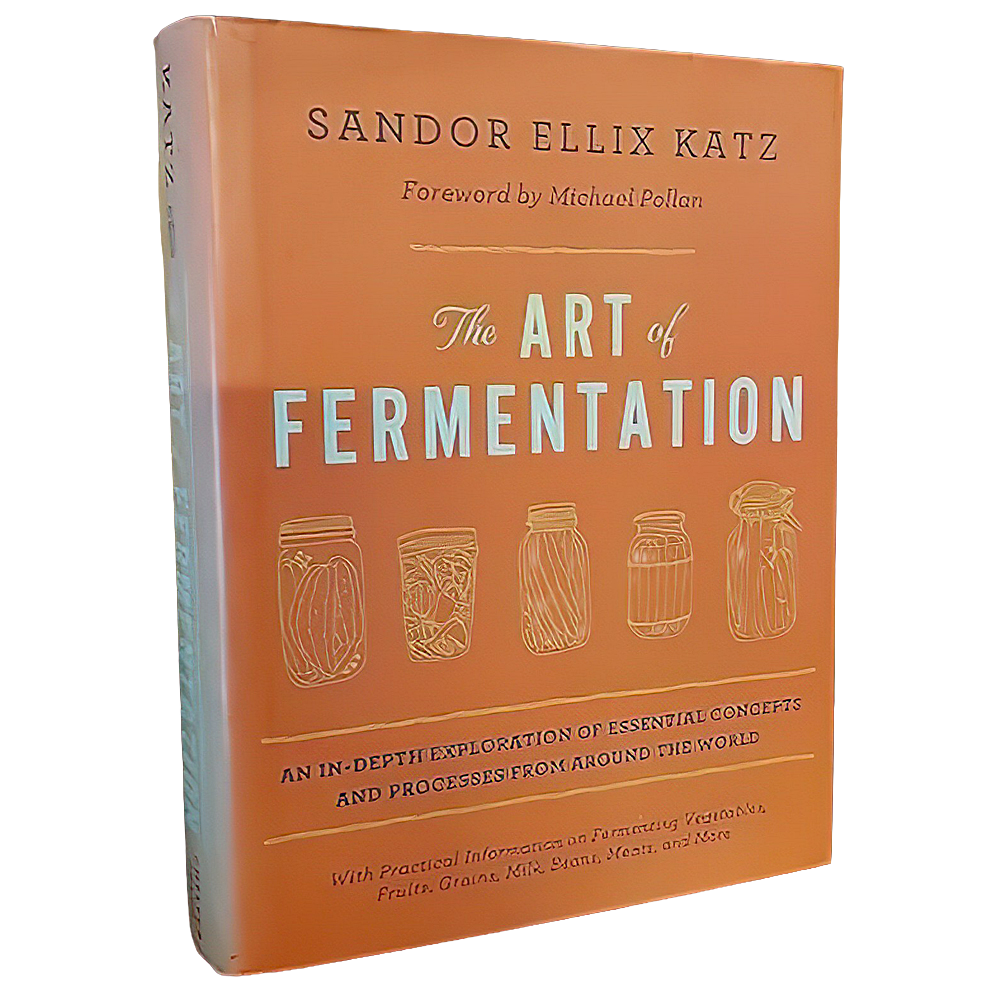
The Art of Fermentation
SKU: 1223570
Comprehensive guide to global fermentation techniques for delicious, healthy foods.
Description
Description


Product Highlights
- Hardcover. Katz, 7"x10", 456 pp.
Details
Foreword by Michael Pollan
Acknowledgments
Introduction
Fermentation as a Coevolutionary Force
Practical Benefits of Fermentation
Basic Concepts and Equipment
Fermenting Sugars into Alcohol: Meads, Wines, and Ciders
Fermenting Vegetables (and Some Fruits Too)
Fermenting Sour Tonic Beverages
Fermenting Milk
Fermenting Grains and Starchy Tubers
Fermenting Beers and Other Grain-based Alcoholic Beverages
Growing Mold Cultures
Fermenting Beans, Seeds, and Nuts
Fermenting Meat, Fish, and Eggs
Considerations for Commercial Enterprises
Non-Food Applications of Fermentation
Epilogue: A Cultural Revivalist Manifesto
Resources
Glossary
A Note on References
Books Cited
Notes
Index
Excerpt from Chapter 2
Practical Benefits of Fermentation
Beyond sacred alcohol, fermentation has been valued throughout history primarily for its usefulness in preserving food. Think about how stable cheddar cheese is compared with milk, for example. Although recent generations have seen fermentation eclipsed as a food preservation method by canning, freezing, chemical preservatives, and irradiation, this ancient food preservation wisdom is still applicable, and may be a key to continued survival in a future filled with uncertainty. Many people are becoming interested in fermentation for its nutritional and health benefits, which are considerable and can be quite dramatic. Scientific investigation has been confirming the link between live-culture foods and good health intuitively understood by cultures around the world. Bacteria play crucial roles in many aspects of our physiological functioning, and fermented foods can support, replenish, and diversify our microbial ecology, which may also be key to adapting to shifting conditions. Fermentation has also been used as a strategy for saving fuel, since fermentation digests certain nutrients that otherwise would require long cooking, and enables foods to remain stable at ambient temperatures without refrigeration. This energy-saving aspect of fermentation also has increased relevance given all the uncertainty about future energy supplies. Yet ultimately more compelling (at least for me) than preservation, health, or energy efficiency benefits are the complex edgy flavors of fermentation, which got me interested in all this in the first place. Food is not strictly utilitarian, after all. It can and does bring us great pleasure. In this chapter, we will explore each of those four major benefits of fermentation: preservation, health, energy efficiency, and flavor.