
 Emergency Supplies
 Water Pumps
 Storage & Serving
 Cleaning
 Cast Iron
 Baking Supplies
 Canning
 USA Made
 Amish Made
 Order Catalog

Bezaleel means “under the shadow of God” and is the name of a school in Guatemala where Galen Lehman did volunteer work in July, 2008. #1 in a series of posts on what he learned there.
Our first stop in Guatemala was an orientation at the offices of the Mennonite Central Committee in Guatemala City.
There the whole group was stunned into silent attention by our local host, who announced with feeling, “Guatemala is a racist, sexist, classist society. You will see it everywhere you turn.”
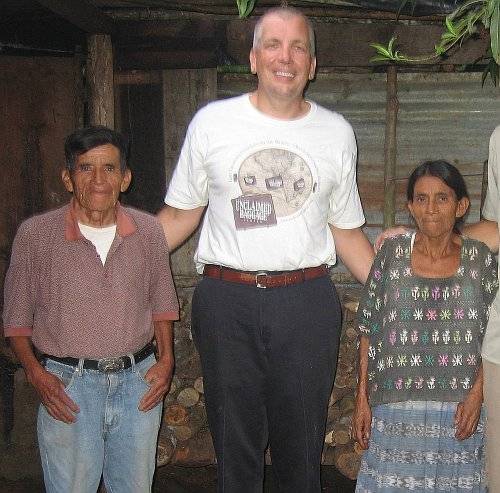
Racist, she said, because while only about 30 percent of the population is “Ladino” (of Spanish descent), Ladinos control virtually everything. Guatemalans of indigenous descent can be easily identified by their non-European facial features. Generations of undernourishment have made them up to a foot shorter than everyone else in Guatemala. They are allowed to hold only low-paying manual labor and farming jobs. (The minimum wage in Guatemala is $4/day and is often ignored.)
Classist because just two percent of the population holds 92 percent of the land (and intends to keep it that way). We were told that there is virtually no middle class. The poor are very poor and have no way to advance. They have been pushed out of the fertile coastal plantation areas and onto the steep slopes of the central mountains. Higher education, freedom of choice and the ability to move on to better economic opportunities are severely limited.
Sexist because women are often treated like second-class citizens. Later, I noted that when we visited Guatemalan homes, the women were often invisible. They stayed in the kitchen or stood quietly around the edges of the common rooms where the men sat talking.
The very rich are usually the descendants of just 20 families. Our trainer rattled off several common surnames, but I was too slow in my note taking to write them down.
 Meanwhile, nearly half the children have chronic malnourishment. 15 to 18 percent of the population is disabled, often from causes related to poverty or harsh manual labor. Most of the people are under 20, and we were told that they have only three choices:
1) Gangs
2) Suicide
3) Migration
This got me thinking. It sounds like those 20 families are pigs at the trough, and may be to blame for many of the problems in Guatemala. I wondered what life was like for them.
Based on my imagination and reading I’ve done since I returned, I think they lead lives of tremendous privilege. They live in the large air-conditioned homes I saw interspersed between the wood-and-tin shacks. They eat lunch at McDonalds (where the price of a Big Mac is about equal to the minimum daily wage). In a country where some people walk an hour to get to work, they drive expensive cars.
I imagine them glorifying a patriarchal family founder, who no doubt triumphed over incredible odds to build the foundation for a family dynasty. They see themselves as having earned the right to live their lives, which is what any of us would do if we were in their place.
They spent generations building their wealth. They want to believe they earned it by hard work, God’s blessing and wise decisions. No one wants to think, “I got ahead by crushing the poor and profiting from their misery.”
Anyone in a position of wealth and power would think exactly the same thing.
The problem is that with great gain comes great responsibility.
Here’s what really makes me uncomfortable. As a business owner, I know that the decisions I make influence the lives of employees, vendors and even customers. I want to do the best that I can to honor the responsibility that comes with it.
When I fail to act ethically or responsibly, please tell me. I want to be held accountable.
Next Week: Read about the other powerful group that is crushing the poor in Guatemala
Learn more about Mennonite Central Committee, a non-profit relief organization.

0 Comments