
 Emergency Supplies
 Water Pumps
 Storage & Serving
 Cleaning
 Cast Iron
 Baking Supplies
 Canning
 USA Made
 Amish Made
 Order Catalog

With all the uncertainty in the world, having extra food on hand is a wise idea. Rather than depending on frozen foods (which are vulnerable to power outages), consider building a supply of shelf-stable foods which aren’t affected by a loss of electricity. But how do you go about building up such a supply? Here are some suggestions.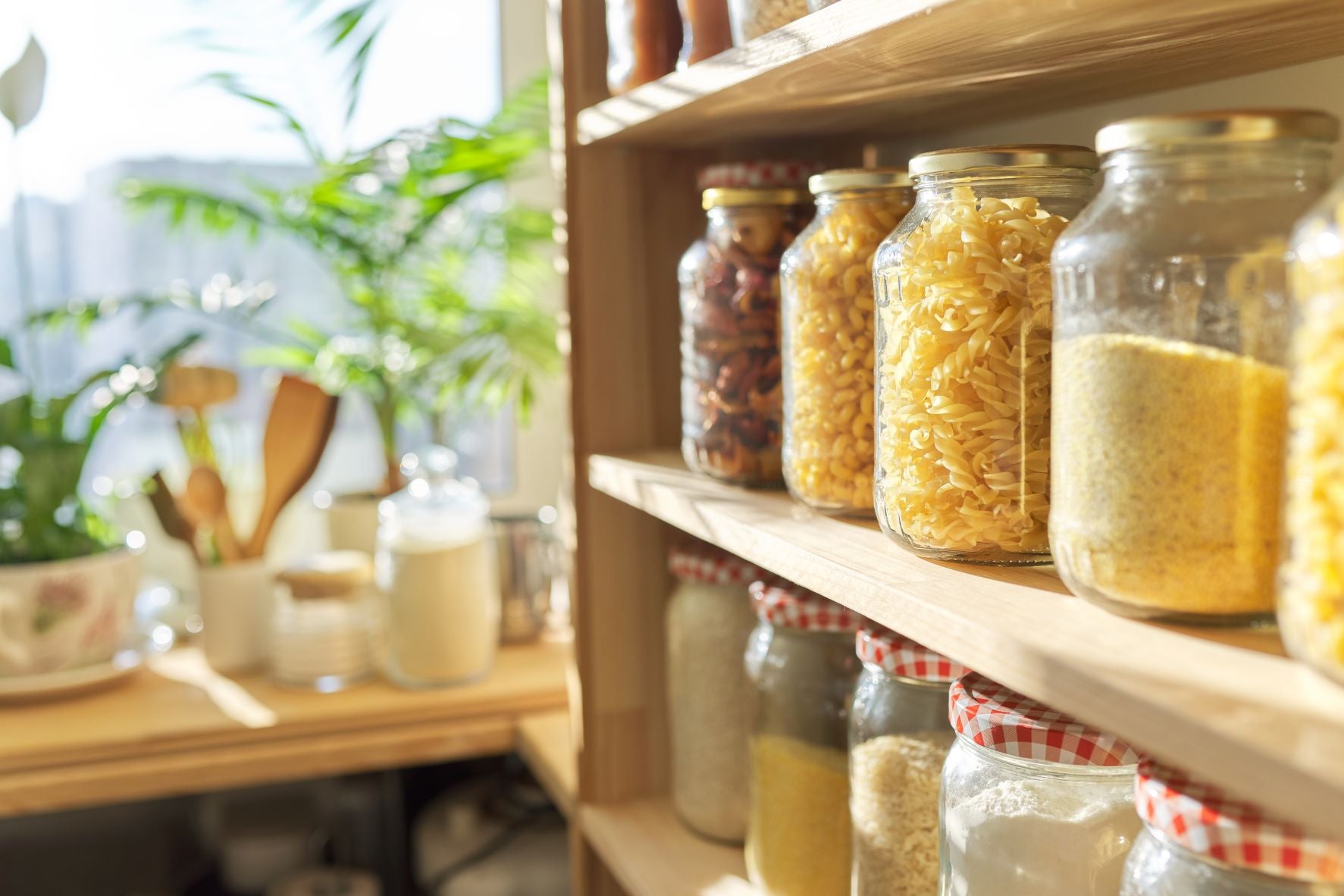
- Your shelf-stable food supply should be a mixture of quick meals (such as canned soups, stews, tuna, etc.) and a wide variety of components from which scratch meals can be created..
- Eat what you store and store what you eat. It does no good to store, say, garbanzo beans if you loathe garbanzo beans. Inventory your family’s tastes, and plan your pantry accordingly.
- Learn to cook from scratch rather than buying pre-packaged foods. Aside from a few convenience foods (canned soups or stews, boxed meals, etc.), the majority of your pantry should consist of staples, which are the building blocks for endless meals. Some of the best recipe books for cooking with shelf-stable ingredients are written by Plain women (Amish and Mennonite cookbooks). Two of my favorites are “The Mennonite Community Cookbook” and “Cooking with Dried Beans.”
- Learn a food-preservation skill (such as dehydrating, canning, fermenting, root cellaring, freeze drying, etc.). Learning to preserve food will allow you to save your garden harvest each year, and/or take advantage of farmer’s markets and in-season produce.
- For popular ingredients such as rice or flour, buy in bulk. For storing bulk dry foods, I’m fond of food-grade buckets, which can hold anywhere from 25 to 40 lbs. of food. These buckets are food-safe, stackable, and protect the contents from pests and moisture. (Hint: a bucket opener is a huge help.)
- Date your inventory. This makes it far easier to use the oldest item first and keep your stock rotated.
If building a shelf-stable food supply seems overwhelming, just remember how to eat an elephant: One bite at a time.
Start a log of everything you use while preparing meals over the period of, say, a month. This will give insight as to whether you depend too much on pre-packaged convenience foods, as well as an idea of how many staples (flour, oatmeal, sugar, etc.) you go through.
Next, assemble two weeks’ worth of recipes your family enjoys which use shelf-stable ingredients. It might take some time to find these recipes, but once you have them in a notebook, you can start stockpiling the necessary elements. Rice, dry beans (including lentils), and pasta are some of the most popular beginning storage items, and are very inexpensive (don’t forget spices to jazz them up).
Categories for your shelf-stable foods should include fruits and vegetables (canned, dehydrated, or freeze-dried), meats, dry staples (whole grains, cornmeal, pasta, rice, etc.), sauces (soy sauce, barbeque sauce, etc.), cooking aids (baking powder, baking soda, vinegar, cocoa powder, cream of tartar, cornstarch, vanilla, powdered milk, powdered eggs, etc.), fats (olive oil, vegetable shortening, etc.), sweeteners (sugar, honey, stevia, etc.), spices, and even comfort foods.
Shelf-stable foods store best in cool, dry, dark areas. Hot garages or attics aren’t the best location. If you don’t have a dedicated pantry, consider unorthodox locations such as a closet, under beds, or skirted coffee/end tables.
It takes time to build a shelf-stable food supply, but the peace of mind is well worth it.
Note: First posted in September 2022.


0 Comments