
 Emergency Supplies
 Water Pumps
 Storage & Serving
 Cleaning
 Cast Iron
 Baking Supplies
 Canning
 USA Made
 Amish Made
 Order Catalog

Many of us know how wonderful and resourceful using a clothesline can be. Instead of putting your clothes in that rumbling electric dryer (which also costs more), hanging your clothes outside to dry preserves energy and gives your clothes that fresh outdoor scent. However, when you are securing your clothes to the line with those handy clothespins, do you ever wonder where those pins come from? How about all the resources used to make them?
Months ago, the folks at Lehman’s, including myself, were first introduced to Grandma’s Pegs® Clothespins. These clothespins have a similar shape to the slotted wooden pins, but that’s where the similarities stop. When I picked one up, I immediately noticed the material. It felt rubbery and durable, much heavier than a wooden pin.
What are they made of?
That’s the first question everyone asks when they first see these clothespins. I initially thought rubber, but it didn’t quite have that rubber texture or smell. While I knew they were different from any clothespin I’ve ever seen, I would have never guessed their true origin: recycled agricultural film. That’s right. They’re made of the same plastic used for wrapping bales of hay.
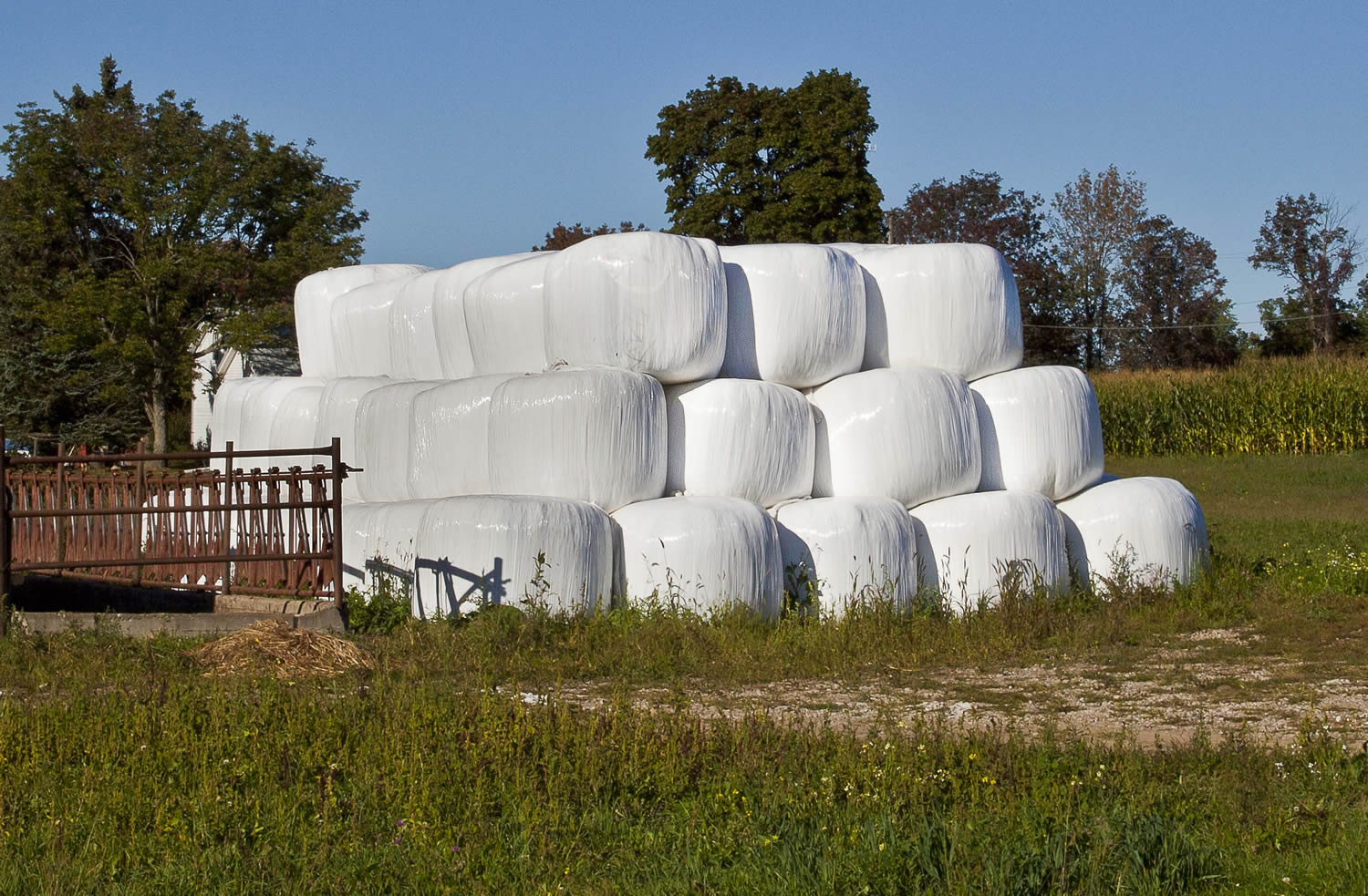
It’s kind of hard to picture that these clothespins started out on the farm, but it’s true. In fact, these clothespins were created to solve a common problem that farmers face. Most farmers come in contact with this plastic every day and use it often. However, there are not many options for disposing this non-biodegradable material when farmers are finished with it. Generally, this plastic wrap is burned, buried in landfills or disposed in a way that is unfriendly to the environment. This dilemma causes millions of pounds to be scrapped every year. (Talk about a serious problem!)
With the desire to change this problem, a husband and wife in Canada decided to take action. They began looking for other uses for this unwanted wrap. They first recycled it into plastic lumber. Then, they came up with the idea of turning the wrap into clothespins, hence Grandma’s Pegs®.
The material these clothespins consist of, polyethelene, makes them incredibly durable. They won’t break or rot. Plus, since they do not have springs, they are gentle on your clothes with a unique notch designed to secure clothes to the line without snagging or staining. They even have a high UV resistance, which is important when they’re going to be exposed to the sun on a regular basis.
However, what’s truly unique about Grandma’s Pegs® is the way they are made. To conserve as much resources and energy as possible, the bale wrap is left unwashed as it is recycled. In fact, some folks say that they can still smell the hay when they first open a bag of these clothespins.
Something so small (in this case, a clothespin) can make a big difference. Grandma’s Pegs® not only gives farmers a green alternative for disposing bale wrap, but they’re also a simple way to make your laundry day a little greener.


0 Comments