
 Emergency Supplies
 Water Pumps
 Storage & Serving
 Cleaning
 Cast Iron
 Baking Supplies
 Canning
 USA Made
 Amish Made
 Order Catalog

An important rule in gardening is to know your hardiness zone. In short, the higher the number, the warmer the climate. For instance, I am in Alaska and we are between zones 2 and 3. However, my son spends his winters in Alabama where his zone is somewhere between 7 and 9. It’s obviously much warmer in Alabama than it is in Alaska so they are a higher zone number.
Many plants do well in some zones and don’t do well in others, like honeyberries which prefer a cold climate versus peaches that thrive on heat. Other vegetation can be planted in different seasons to thrive. For example, in Alaska we grow our broccoli and cabbage in the summer, but in higher zones, they might plant them as a winter crop.
Oftentimes when folks move from one climate to another, it can be hard to get to know what will produce well in your area because the “rules” can be so different. When we moved to Alaska, I had to give up my dream of a peach orchard and learned to embrace what we can grow here, like honeyberries, saskatoons, bush cherries, currants, and apples. Plus, we can grow amazing broccoli, cauliflower, and cabbage, but tomatoes take a bit more to thrive (yes, we pamper our tomatoes).
Two plants we’ve been able to grow in all climates without fail are strawberries and raspberries. Here on our zone 2 farm, we do things very different from how we did in Oregon where we were a high zone 6. Let’s talk about how to grow strawberries and raspberries and to help them thrive no matter where you live!
Growing Strawberries
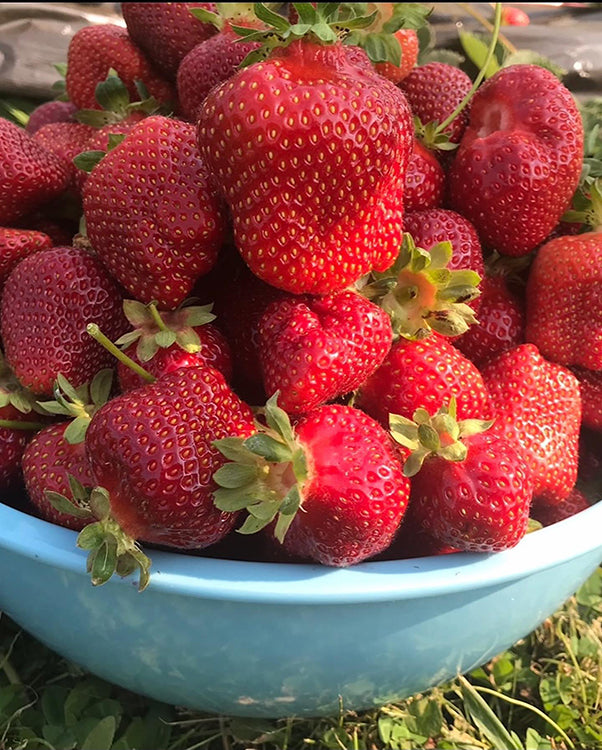
No matter where you live, there are some important basics to growing sweet, juicy strawberries.
- 12” apart (we stagger)
- Don’t let them dry out completely
- Don’t bury the crown
- Fertilize regularly
- Plant in full sun
- Keep the runners cut for continued production
- Prefer sandy soil – not clay
- Mulch plants to retain water
There are several things to consider when choosing a variety to plant in your garden, beyond just the hardiness zone. Day neutral strawberries (also called everbearing) will produce all season long, but their production is less in most zones. However, in zones 4 and lower, everbearing strawberries, like Seascape, can be the heaviest producers possible! Here in Alaska, we’re a zone 2, and we get so many seascapes every season. However, because they aren’t hardy in our area, we do have to replant every year. June bearing varieties produce a heavy crop early in the season (June for most areas, July for most Alaskans) and then they are finished for the year. Some June-bearing strawberries will put on a second crop in late August or early September, but for the most part, your biggest crop will come during that first fruiting.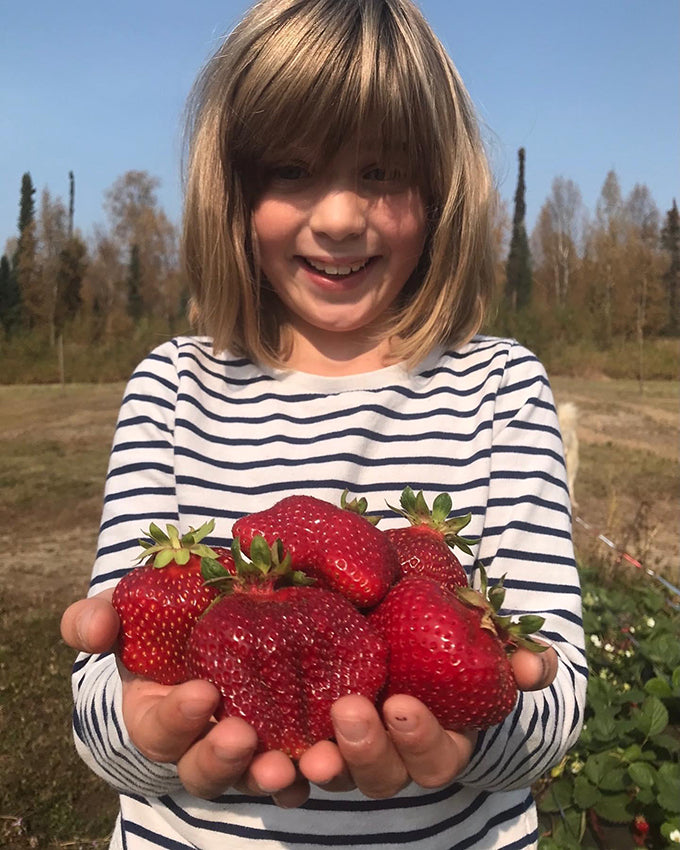
Here are some favorite strawberries with information on zone hardiness and flavor.
- Seascape – In Alaska, we plant Seascapes as an annual, but they are worth replanting every year! These everbearing berries start out small, but by the end of the season, they are the size of your hand and they are out of this world for flavor! They are truly hardy in zones 4-8.
- Benton – We used to pick Benton when we lived in Oregon when I was growing up. These berries are not just good flavored, they also preserve well! Great for zones 5-9
- Honeoye – These hardy buggers will come back, even in the coldest zones in Alaska. They have pretty good flavor but their hardiness is what makes them so popular for northern zones. Best in zones 1-5.
- Sweet Charlie – This little berry is packed with so much flavor. I plant these here in Alaska even though they don’t winter over nor do they produce much the first year. In my opinion, these are the best flavored strawberries ever in the history of ever. Best in zones 5-8.
- Earliglow – Hardy in zones 4-8, Earliglow is a very popular berry across the nation. It has that good, old fashioned strawberry flavor we all crave. This one is super tasty!
- Cardinal – Cardinal is a great berry for warmer regions, hardy in zones 5-8. It is a super sweet, big strawberry.
- Chandler – These produce really well on the west coast as they were created in California and were developed for that area. They are hardy to zones 5-8.
- Fort Laramie – A super sweet berry that does well in zones 3-6.
Growing Raspberries
Raspberries are another berry that we can grow all the way across the US. There are fewer varieties to choose from, but the flavor profiles for raspberries vary from sweet to tart and the colors are so fun!
A major consideration when planting raspberries is that they will spread. And spread. And spread. And spread. They don’t understand boundaries and they certainly don’t care about property lines, flower bed borders, or even deck areas. Raspberries spread underground and they will go wherever they choose. They can pop up just about anywhere once they take root!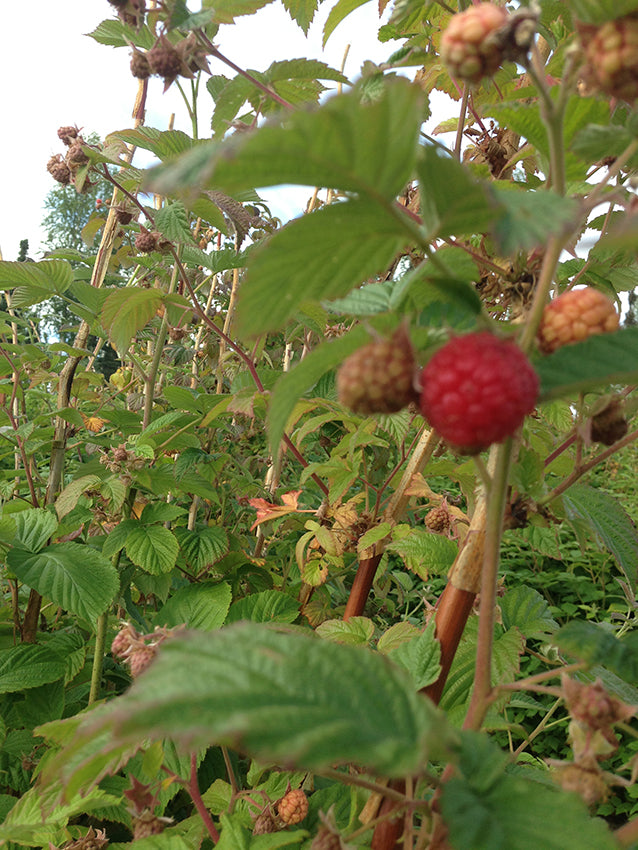
Here are a few basics for all raspberries:
- Well drained soil
- Full sun (more sun = more fruit)
- Water regularly
- Know the variety and how they fruit. Some only produce fruit on second year canes.
- They grow best in the ground
- There are some thornless varieties which can be helpful, especially if little hands like to pick.
- Mulch to retain moisture and discourage weeds
So many raspberries, so little time!
There are varieties of raspberries that will grow in all zones of the US. Red raspberries are what most of us are used to and they all have the good, strong raspberry flavor.
Yellow (aka golden) raspberries produce a much sweeter berry that looks just like a raspberry but they have a milder flavor. Golden raspberries also can grow across the nation from zones 2-9.
Black raspberries are a little more particular in that they don’t like to have their feet cold for too long. Black raspberries have a more blackberry flavor and will thrive in zones 4-10.
Purple raspberries (a hybrid of black and red) have the sweetness of a black raspberry with the flavor of a red raspberry but they are the least hardy of all of the raspberries. They do well in zones 5-9.
No matter where you are located, you can grow strawberries and raspberries for fresh eating and preserving! These berries truly are the flavor of summer!


0 Comments