
 Emergency Supplies
 Water Pumps
 Storage & Serving
 Cleaning
 Cast Iron
 Baking Supplies
 Canning
 USA Made
 Amish Made
 Order Catalog

I grew up watching and reading about cowboys. Every Saturday night my parents, siblings and I would gather in front of the black and white console television and watch Gunsmoke. I saw John Wayne’s Westerns at the movies, and read Louis L’Amour and other Western writers.
All westerns shared common themes. Rough and tumble men tracking less desirable roughnecks across valleys and plateaus on horseback. Bands of the ‘good guys’ such as cattle drives or wagon trains, always included a scruffy, grumpy old cowboy cook, usually nicknamed “Cookie”.
His kitchen was a chuck wagon, his cabinetry a wooden box mounted on the rear of the wagon, his work area a sideboard off the tail gate of the wagon, and his main cooking dish a large cast iron pot.What was in the pot? Stew or chili, of course. While I didn’t have a natural taste for either dish as a kid, I forced myself to eat it until I developed a liking for it … just because the cowboys ate it. Nowadays stew, soups and chili rank among some of my favorite meals.
Dutch ovens come in many sizes but only two main styles – an oven with legs and a rimmed lid, or a smooth-bottomed pot with a rounded smooth cover. The second type is also known as a “stew pot”. These ovens are great for using over a cooking flame or inside a kitchen oven. They can also be used with charcoal, but the lids on these pots do not have the external lip that helps keep the coals in place. My first Dutch oven was a 10-inch stew pot and I’ve prepared many a meal in it by using coals.
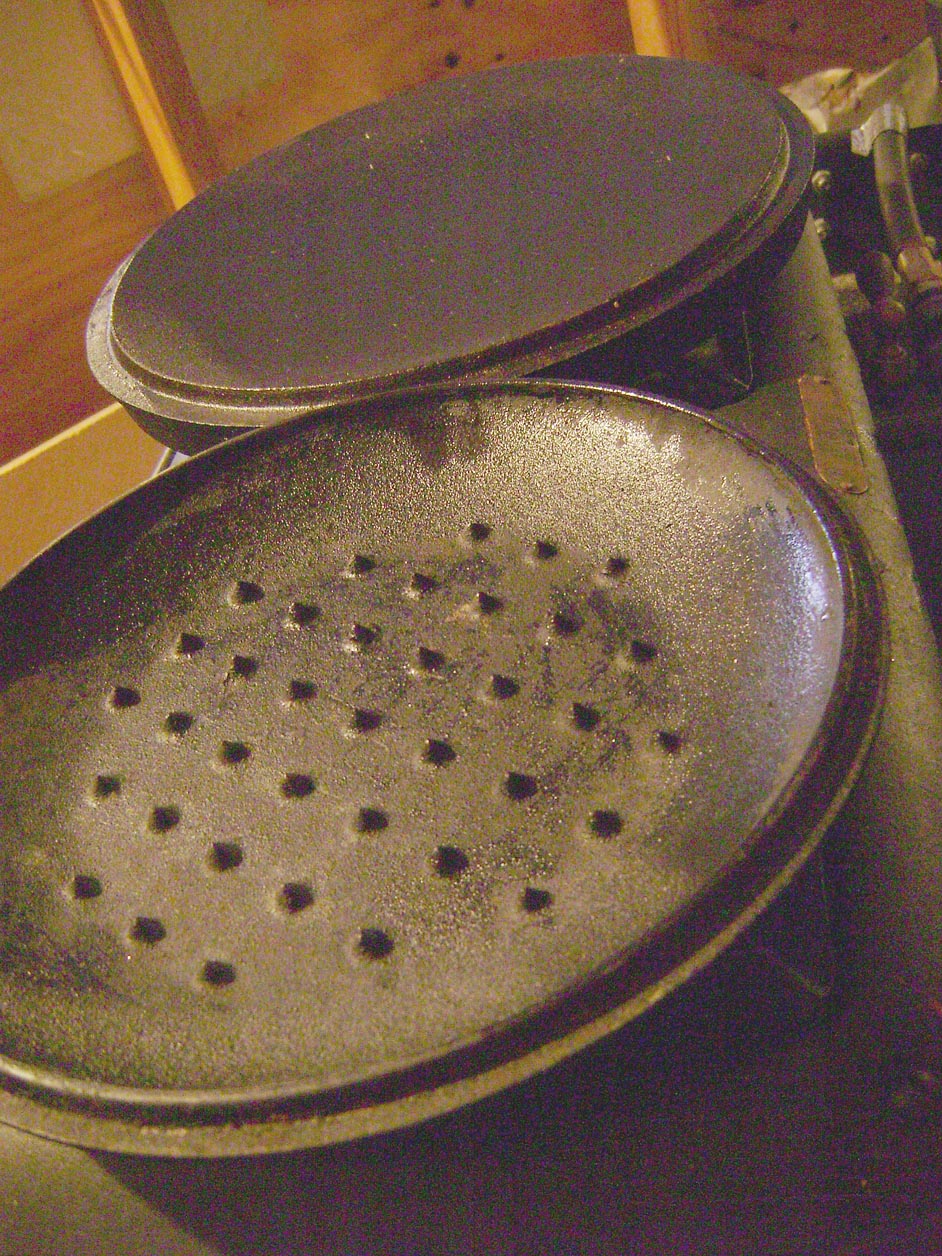
Ovens with legs on the bottom work well because the legs are there for a specific purpose: to help hold the pot steady over an uneven bed of coals. Stew pots have a specific trait built in as well. On the underside of the lid you’ll find rows of spikes. The dome-shaped lid and rows of spikes work together to capture steam and return the flavorful moisture back to whatever’s being boiled or baked inside.
The movies and T.V. shows always showed the old scraggly cook making some variation of stew. With the pot boiling over a small cooking fire the old cook would ring the dinner bell. The hungry cowpokes would form a line to have a big helping of steaming stew dipped onto their tin plates. Cornbread or biscuits prepared in another oven or skillet were doled out to use for “sopping” the tasty brown juices from among the meat and vegetables.
Just last week I decided to make some cowboy-inspired stew. I pulled my “stew pot” Dutch oven from the storage container and set it on a propane burnerto warm. I added a little cooking oil to the pot, and rinsed and patted dry two pounds of cubed-up stew meat from the refrigerator. I rolled the meat pieces in a bowl of flour, salt and pepper until they were well coated. When the oil was warm I dropped the meat into the pot and turned it every couple minutes until it was browned on all sides.
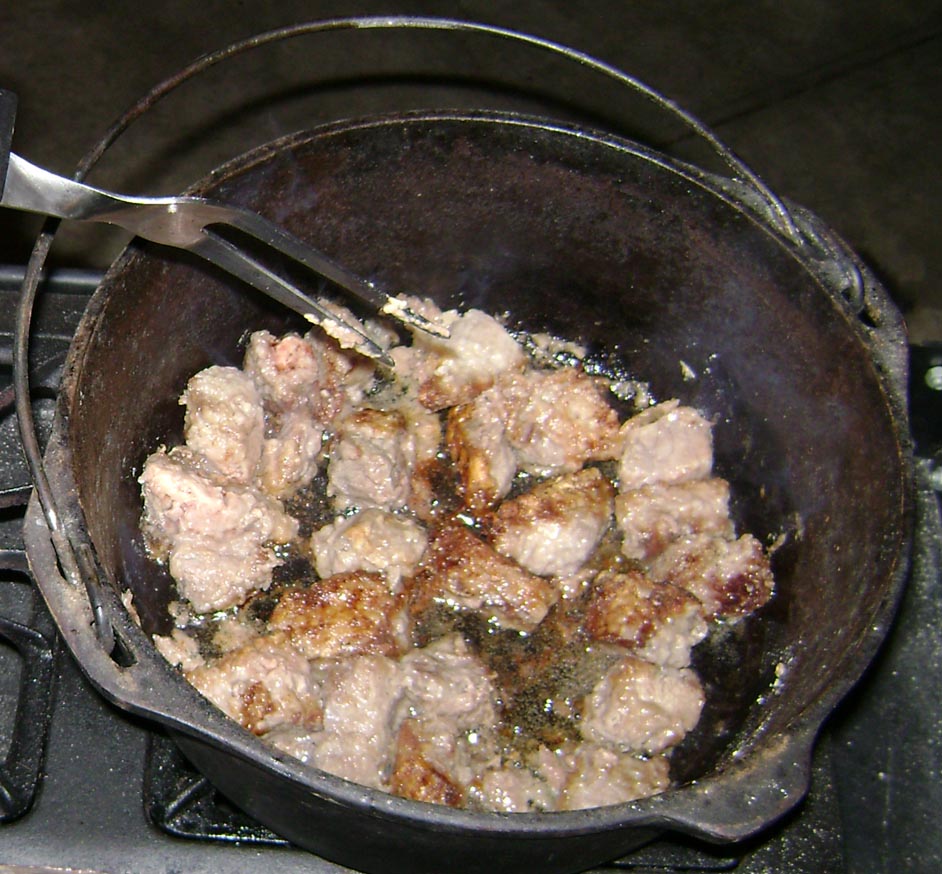
I make my beef stew in much the same way old “Cookie” would have, with one exception. I went the easy route and used a pre-packaged beef stew spice packet. Other than that the steps haven’t changed since the first cook mixed beef cubes and vegetables to make that first pot of Dutch oven stew–long before Cookie made the scene.
With the meat now browned, I added three cups of water and the stew packet, brought the liquid to a boil and then backed it down to a simmer. I added the lid and looked at my watch. An hour later the beef and broth was ready for the vegetables.
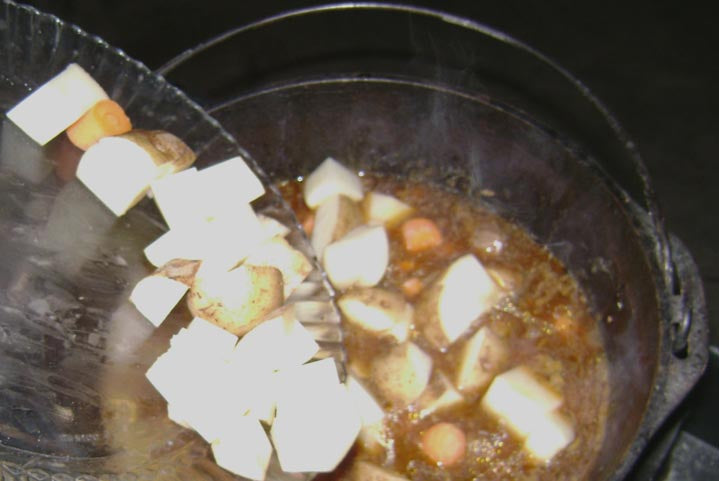
There are countless beef stew recipes recorded on websites, in books and on index cards in recipe boxes. The one I’ve included here involve a a basic amount of blended spices and food stuffs. (My wife tends to make more complex stews than I ever do.) While the meat and juices were simmering, I cut up three medium potatoes, four medium carrots, one long stalk of celery and a slice of onion. I removed the lid from the oven and slid the plateful of chopped veggies into the mixture. I thought I might need to add some additional liquid, but I didn’t. The simple lip of the oven lid creates a more than adequate seal to trap in juices, which only get richer as the stew cooks.
I let the stew simmer for nearly two more hours. About 30 minutes before we planned to eat, I fired up 30 briquettes in my charcoal chimney. (I was shooting for a baking temperature of about 375 F.) While the pieces burned down to a white ash covering, I mixed up a simple cornbread mix. I even remembered to add spoonful of sugar, one of my wife’s tricks for giving the finished product a slight hint of sweetness. I poured the mixture into a bread loaf pan. Next, using tongs, I plucked 15 glowing briquettes from the charcoal chimney and arranged them in about a 12 inch circle. I sat a 12-inch Dutch oven over the assortment, placed a cast-iron trivet inside, and then set the pan of cornbread mix on the trivet. I covered the oven with the lid and added the remaining 15 briquettes on top.
Some 30 minutes later I went back out to the workshop, where I do most of my Dutch oven and cast iron cooking. The stew was ready to eat and the cornbread was a perfect golden brown on top. The toothpick test revealed it was baked throughout. The meal provided supper for three people for two nights. If you’ve never cooked using a Dutch oven it can be intimidating simply because it’s not as responsive to heat adjustments and easy to handle as today’s modern cookware. But, as I’ve said in earlier articles, a properly seasoned oven can be nearly as non-stick as the most expensive new pot or pan, and the metal and methods offer incentives that make it well worth the effort to buy a Dutch oven and learn. If you have no one to teach you Dutch oven and cast iron cooking skills look for a good book on the topic, or search this blog for other Dutch oven cooking features.
Cast iron ovens work well for all stews, soups and chili. Here are a few recipes to consider.
Beef Stew
Ingredients
- 2 lb. stew meat
- 1/4 cup cooking oil
- 3/4 cup flour
- 2 cans beef broth
- 1 cup water
- 3 tsp. salt and pepper
- 1 tsp. paprika
- 3 bay leaves
- 1 Tbsp. chopped garlic
- 1 cup finely chopped onion
- 5 potatoes, skinned and cut in big bite size pieces
- 4 carrots cut in half-inch long pieces
- 1 stalk celery, chopped small
- 1 cup water
Pre-heat Dutch oven with cooking oil inside. Put flour in large plastic bag or bowl. Place meat into baggie or bowl, mix to cover meat well with flour in bowl. If using bag, seal tightly and toss meat in bag until well coated.
Brown meat, turning until uniform on all sides. Pour 2 cans of beef broth and water into oven, also adding paprika, garlic, salt and pepper. Stir until blended, bring to a boil, then lower to a simmer and cover for one hour.
Add onion, potatoes, carrots and celery to pot. Stir well, add bay leaves, cover again and let simmer for at least two hours or until vegetables are adequately done. Remove bay leaves and enjoy.
Venison Stew
Venison stew can be made using above beef stew recipe but substituting beef for venison. Below, find another take on venison stew as an option.
Ingredients
- 2 tablespoons cooking oil
- 2 pounds venison stew meat
- 3 large onions, coarsely chopped
- 2 garlic cloves, crushed
- 1 teaspoon dried oregano
- 1 tablespoon salt
- 1 teaspoon pepper
- 3 cups water
- 5 potatoes, peeled and quartered
- 1/2 pound carrots, cut into 1-inch pieces
- 1/4 cup all-purpose flour
- 1/4 cup cold water
Heat oil in a Dutch oven. Brown meat. Add onions, garlic, oregano, salt, pepper and water. Simmer, covered, 1-1/2 to 2 hours or until meat is tender.
Add potatoes and carrots. Continue to cook until vegetables are tender, about 30-45 minutes.
Mix flour and cold water; stir into stew. Cook and stir until thickened and bubbly.
Chicken Soup
Ingredients
- 1 whole chicken
- 64 fluid ounces chicken broth
- 1 large onion chopped
- 3 ribs of celery sliced
- 3 carrots peeled and chopped
- 3 parsnips peeled and chopped
- 1/2 teaspoon salt
- Ground black pepper
Place all ingredients but the pepper into a Dutch oven. Bring to a boil, then reduce to a simmer. Cover and simmer for 1 1/2 to 2 hours, or until chicken is done and vegetables are tender. Taste and adjust seasonings as needed.
Sprinkle with black pepper prior to serving.
Chili
Ingredients
- 1 pound ground beef
- 1 onion chopped
- 1-14.5 ounce can tomato sauce
- 1-14.5 ounce can stewed tomatoes
- 1 1/2 cup water
- Pinch of chili powder
- Pinch of garlic powder
- Salt and pepper
- Canned kidney or chili beans (up to 45 ounces or to taste)
Pre-heat Dutch oven and add been and onion, sauté until meat is brown and onion is tender.
Add tomatoes, sauce, beans and water. Add chili powder, garlic, salt lightly and pepper lightly. Bring to boil, then reduce to simmer. Cover and let cook for at least 20 minutes. Season to taste.


0 Comments